AI Regulation Tracker / New law
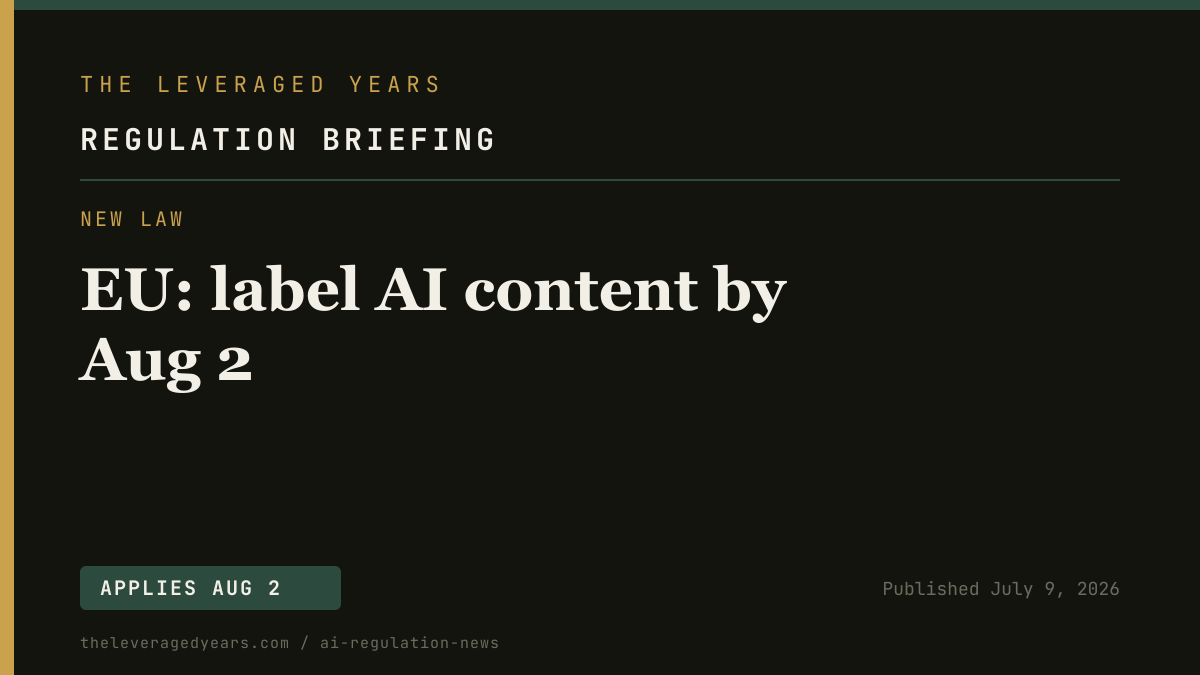
EU Sets August 2 Deadline to Label AI-Generated Content as Article 50 Takes Effect
Regulatory summary: AI Act Article 50 sets the EU's transparency rules for AI-generated content, and its obligations become legally applicable on August 2, 2026. Providers of generative AI systems must mark outputs in a machine-readable format so they are detectable as artificially generated or manipulated.
The European Commission published the final Code of Practice on Transparency of AI-Generated Content on June 10, 2026. It supports AI Act Article 50, whose legal duties to mark and disclose AI-generated images, audio, video, and text apply from August 2, 2026, backed by fines up to 15 million euro or 3 percent of worldwide turnover.
Key takeaways
- The Commission finalized the transparency code on June 10, 2026 and issued accompanying draft Article 50 guidelines, moving the marking and disclosure duties from abstract statute toward operational practice weeks before the August 2, 2026 application date. Providers now have a reference standard for machine-readable marking, and deployers have clarified expectations for deepfake and public-interest-text disclosure.
- Marketing, creative, and advertising teams generating synthetic images, audio, or video; media and publishing organizations producing AI-assisted text on matters of public interest; agencies delivering AI content for clients; and any professional deploying generative image, audio, video, or text tools for a public audience in the EU. Providers of the underlying generative models and tools carry the marking obligation.
- Status: Code final and published (voluntary) as of June 10, 2026.
- Inventory every place your organization publishes AI-generated or AI-manipulated content to the public in the EU, then assign each output a marking or disclosure rule and wire that rule into the workflow before August 2, 2026.
| Date | Jurisdiction | Rule | Affected professionals | Status or effective date |
|---|---|---|---|---|
| 2026-07-09 | European Union | The Commission finalized the transparency code on June 10, 2026 and issued accompanying draft Article 50 guidelines, moving the marking and disclosure duties from abstract statute toward operational practice weeks before the August 2, 2026 application date. Providers now have a reference standard for machine-readable marking, and deployers have clarified expectations for deepfake and public-interest-text disclosure. | Marketing, creative, and advertising teams generating synthetic images, audio, or video; media and publishing organizations producing AI-assisted text on matters of public interest; agencies delivering AI content for clients; and any professional deploying generative image, audio, video, or text tools for a public audience in the EU. Providers of the underlying generative models and tools carry the marking obligation. | Code final and published (voluntary) as of June 10, 2026. Article 50 statutory obligations become legally applicable August 2, 2026. The August 2, 2026 date was not postponed by the Digital Omnibus package. |
Frequently Asked Questions
When do the EU AI Act Article 50 transparency obligations apply?
They become legally applicable on August 2, 2026. That date was not postponed by the Digital Omnibus package.
Is the June 10, 2026 Code of Practice mandatory?
No. The Code of Practice on Transparency of AI-Generated Content is voluntary. The underlying Article 50 obligations, however, are binding law and apply regardless of whether an organization adopts the code.
What is the difference between the provider and deployer duties?
Providers must mark AI outputs in a machine-readable format so they are detectable as artificially generated. Deployers must disclose deepfakes and AI-generated text published to inform the public on matters of public interest, in a way people can understand.
Does human editorial review remove the disclosure duty?
For AI-generated text on matters of public interest, the disclosure duty does not apply where the content underwent human review or editorial control and a person or organization holds editorial responsibility for the publication. Organizations should be able to evidence that review.
What are the penalties for non-compliance?
Under Article 99, breaches of Article 50 can draw administrative fines up to 15 million euro or up to 3 percent of total worldwide annual turnover, whichever is higher, enforced by national market surveillance authorities.
Internal links
Sponsored Training
Practical AI training for regulated professionals, built around verification, documentation and a defensible process. See the courses.
Browse the full AI Regulation News tracker
Informational analysis for working professionals, not legal advice. Confirm how any rule applies to your situation with qualified counsel.