If you have spent twenty or thirty years in this industry, you have heard a lot of promises about software. Most of it never touched the actual work. Plans still printed. Bids still ran late. The trailer still ran on coffee and spreadsheets. So when people start talking about artificial intelligence on the jobsite, it is fair to be skeptical. You have earned that skepticism.
This article is not a pitch. It is a tour of ten real construction and engineering companies, all of them serious operations you would recognize, and exactly what they are doing with AI right now. Some of it is estimating. Some of it is safety. Some of it is robots driving piles into the ground for solar farms. We will be honest about where the numbers come from, because a lot of the figures floating around come from the vendors selling the tools, and those deserve a second look.
The point is simple. AI in construction is not a far-off idea. It is on jobsites today, doing specific jobs, and the people running these companies are estimators, project managers, and owners who are mostly over forty and were not born holding a phone. If they can put this to work, so can you.
The short version: AI is already doing practical jobs in construction: faster estimating and bidding, spotting safety risk before someone gets hurt, optimizing design for cost and carbon, simulating the schedule, running narrow autonomous machines, and tracking what actually got built against the plan. The most proven uses are narrow and boring in the best way. Be careful with the numbers: some results are independently reported, many percentages come straight from the company or the software vendor, and we flag those. You do not need to be technical to start.
Estimating and bidding: counting quantities and pricing risk
Estimating is where most firms feel the pain first. A good estimator is worth their weight in gold and there are never enough of them. Takeoffs eat days. Bids go out the door with a number that was half judgment and half hope. This is the corner of the business where AI has the clearest, most testable value, because the work is repetitive and the inputs are documents.

Coastal Construction is one of the largest privately held builders in the southeastern United States, based in Miami. They started using a tool called Togal.AI to automate takeoffs, the part of estimating where you measure square footage and count every room, wall, and door off a set of drawings. The software reads a floor plan and produces the measurements in seconds instead of the days or weeks it takes by hand.
Coastal won first place in the 2023 AGC National Construction Innovation Award for this work, which is an independent recognition from the Associated General Contractors of America rather than a vendor claim. The company has reported that in the first year at its Miami office the tool saved close to a million dollars and roughly fourteen thousand hours of estimating time. Treat the dollar figure as a company report, but the AGC award is real and earned. The tool itself is built by Togal.AI, a Miami estimating-software company.
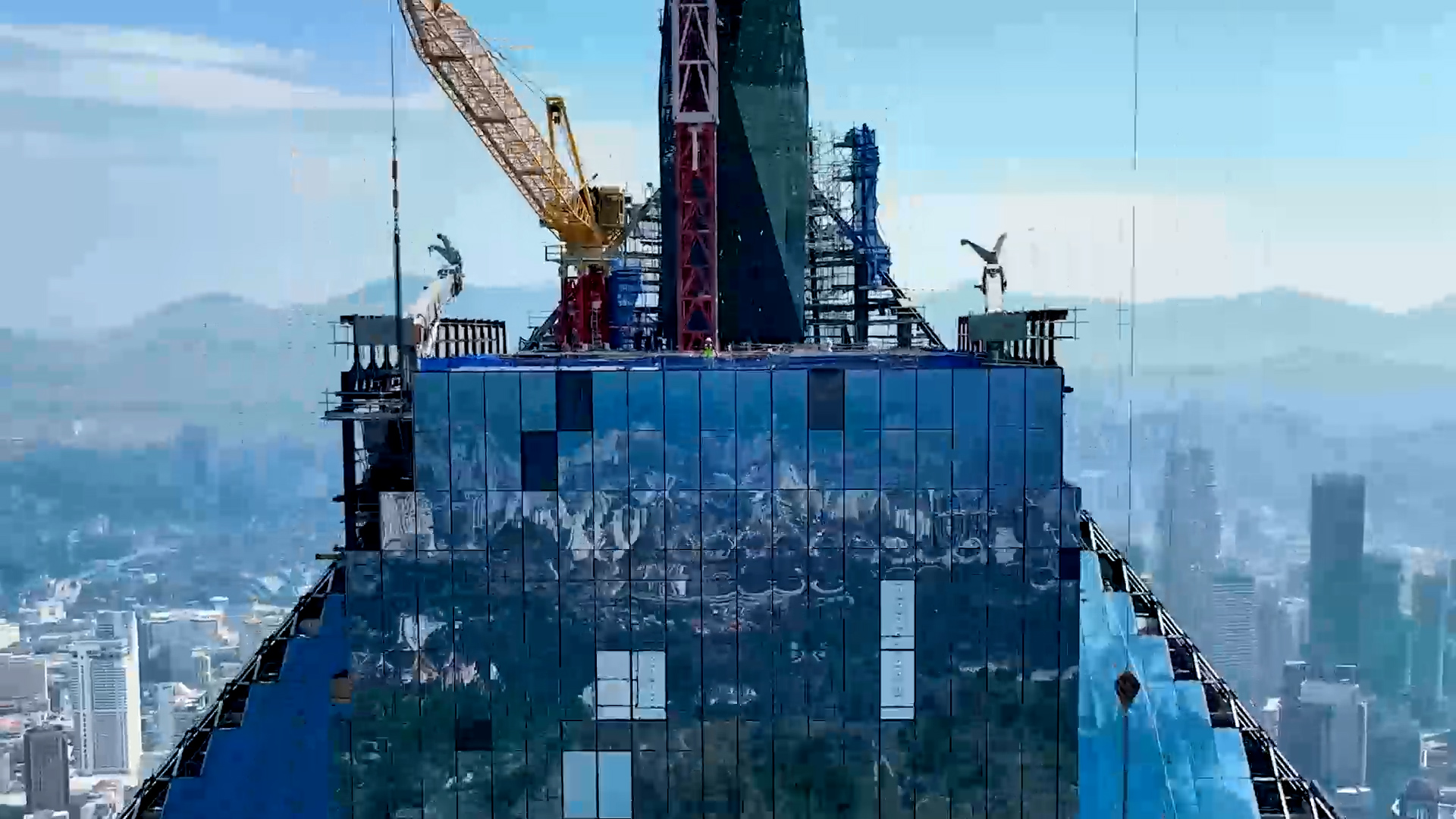
Turner Construction is one of the biggest general contractors in North America, the kind of firm that builds stadiums, hospitals, and data centers. Turner has been working with machine learning to forecast cost and flag project risk earlier, using past project data to predict where a job is likely to slip or where a supply chain might fail.
Here is where we have to be straight with you. The widely repeated figure that Turner cut project delays by around thirty percent and generates tens of millions in annual savings traces back to a single secondary blog, not to Turner itself or to an independent audit. So treat that number as an unverified claim, not a fact. What is solid is the direction: a contractor of this size is putting real money into predictive cost and risk models, because catching a problem in week two is worth far more than discovering it in month ten.
Predictive safety: reading the jobsite before someone gets hurt
Every superintendent knows the feeling of walking a site and sensing that something is off. AI safety tools are an attempt to scale that instinct across thousands of photos and hundreds of crews. The idea is not to replace the human eye. It is to point the human eye at the right place faster.

Suffolk Construction, a large national builder based in Boston, is one of the clearest examples. Suffolk helped develop a computer vision system, originally with a company called Smartvid.io that later became Newmetrix, that looks at jobsite photos and flags hazards. The model was trained on years of images and learns to recognize problems like a worker without fall protection, a missing guardrail, or housekeeping that has gotten out of hand.
What makes the approach interesting is the prediction layer. The system does not just tag photos. It scores which projects carry the highest risk so leaders can send safety attention where it is most needed. Suffolk has reported improvements in its recordable incident rate after rolling this out, and the broader safety work has been written up by independent industry press rather than only by the vendor. The honest framing is that this is a tool for triage, a way to put a thousand photos in front of a system that never gets tired and have it raise its hand on the ones that matter.
Generative design and carbon: testing a thousand options at once
Generative design flips the usual order of work. Instead of an engineer drawing one design and checking it, you tell the software your goals and constraints, and it produces many options that meet them, ranked by what you care about, whether that is cost, material use, or embodied carbon. The engineer still decides. The machine just does the grinding work of exploring the field.
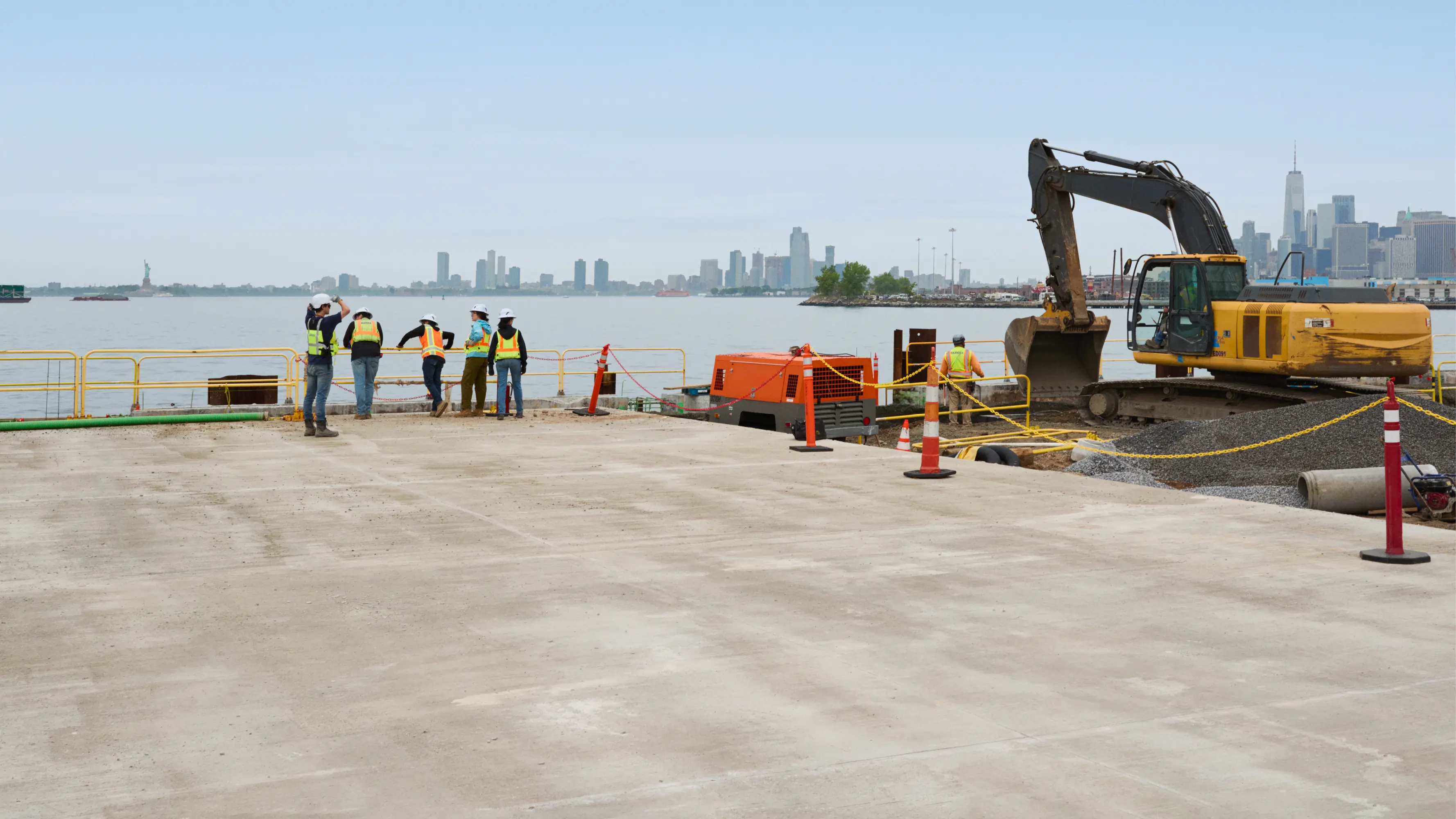
Skanska is one of the largest construction and development firms in the world, with deep roots in the Nordic region and major work across the United States and the United Kingdom. On the United Kingdom HS2 high speed rail program, a Skanska led team built an AI assisted estimation and design tool that simulates many design and material options for structures like bridges. Skanska has estimated the approach could cut costs by roughly thirteen percent across the delivery lifecycle and reduce embodied carbon by a meaningful margin. Those percentages are company stated figures tied to a specific program, so read them as Skanska's own projections rather than independently audited results. Separately, Skanska's engineering group in Sweden has run a machine learning research project focused on optimizing bridge structures, which tells you this is a sustained bet, not a one off experiment.
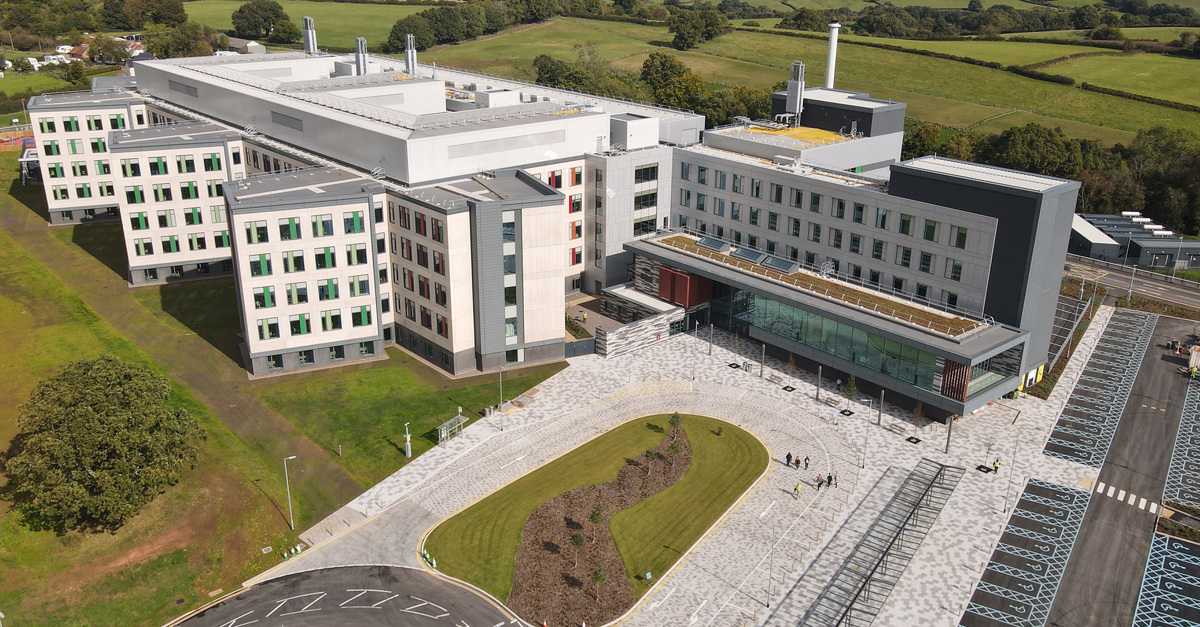
Laing O'Rourke, a major international contractor headquartered in the United Kingdom, pairs generative design with digital twins. On Everton Football Club's new stadium at Bramley-Moore Dock in Liverpool, a roughly eight hundred million pound project, the team built a digital twin to simulate the build sequence and detect clashes between systems before crews ever broke ground. Finding that a duct run wants to occupy the same space as a steel beam is cheap on a screen and expensive in the field. Laing O'Rourke also runs a generative design platform, internally known as Delve, that tests cost and sustainability scenarios early, when changing your mind is still affordable. The clash detection and digital twin work here has been documented by independent industry coverage.
If the design and carbon angle is where your interest sits, the broader pattern of how building professionals are adopting these tools shows up in our companion piece on how architects and interior designers run on AI as well.
AI scheduling: simulating the build before you build it
A construction schedule is a set of assumptions about the future. AI scheduling tools treat the schedule as something you can simulate and stress test, the way an engineer stress tests a structure. They look at how activities depend on each other, where the crews and cranes really are, and which sequence finishes soonest without tripping over itself.
Bechtel is one of the largest engineering and construction firms in the world, the company behind dams, refineries, transit systems, and now large data centers. Bechtel has used spatial and neural network based schedule simulation to test sequencing on complex projects, looking at the physical site and how work flows through space rather than treating the schedule as a flat list of tasks. More recently, Bechtel partnered with NVIDIA to build physically accurate digital twins of gigawatt scale data centers using the Omniverse platform. Engineers simulate power, cooling, and electrical systems inside the twin to predict failures and refine the design before construction, then keep running the twin as an operating model after the building goes live. This work has been covered by independent engineering and project management press, which gives it more weight than a vendor brochure would.
The lesson for a smaller firm is not that you need NVIDIA. It is that the schedule is no longer something you build once and defend. It is something you can ask questions of, over and over, before you commit crews and money to a sequence.
Autonomous robotics: machines that drive piles, weld steel, and move earth
This is the part that gets the headlines, and it deserves a careful eye. Autonomous machines are genuinely on jobsites, but they handle narrow, repetitive, physically punishing tasks, and they work next to crews rather than replacing them. The honest read is that robotics is the least mature of the categories here, and the most exciting.
Blattner, a large renewable energy contractor, builds utility scale solar farms, and solar farms need an enormous number of steel piles driven into the ground to hold the panels. Blattner adopted an autonomous robotic pile driver from Built Robotics, the RPD 35, which uses GPS and onboard sensors to position and drive piles with a small crew supervising rather than doing the heavy, repetitive lifting by hand. The reported figure is that a two person crew can install more than three hundred piles a day, several times faster than traditional methods. That production number comes from the vendor and from Blattner's own reporting, so treat it as a reported figure rather than an independent measurement, though the deployment itself has been covered by Engineering News-Record.

Shimizu has gone further than almost anyone on jobsite robotics, partly because Japan's shrinking workforce gives the country no choice. Shimizu's Smart Site program includes a column welding robot, sometimes called Robo-Welder, that uses laser shape recognition sensors to read each weld groove and guide its torch, along with a telescopic crane and a ceiling and floor finishing robot that work overnight. These deployments have been documented by independent construction press and by Stanford's research center for facility engineering, which is about as credible as sourcing gets in this field.
Obayashi has deployed a fully automated, AI controlled autonomous crane on the Kawakami Dam project, using LiDAR sensors and an AI control system to stack concrete layers with a suspended load controller keeping the load steady. Like Shimizu, Obayashi is leaning into automation because the available workforce keeps shrinking, and the dam work has been written up by independent construction press and academic facility-engineering researchers rather than only by the company.
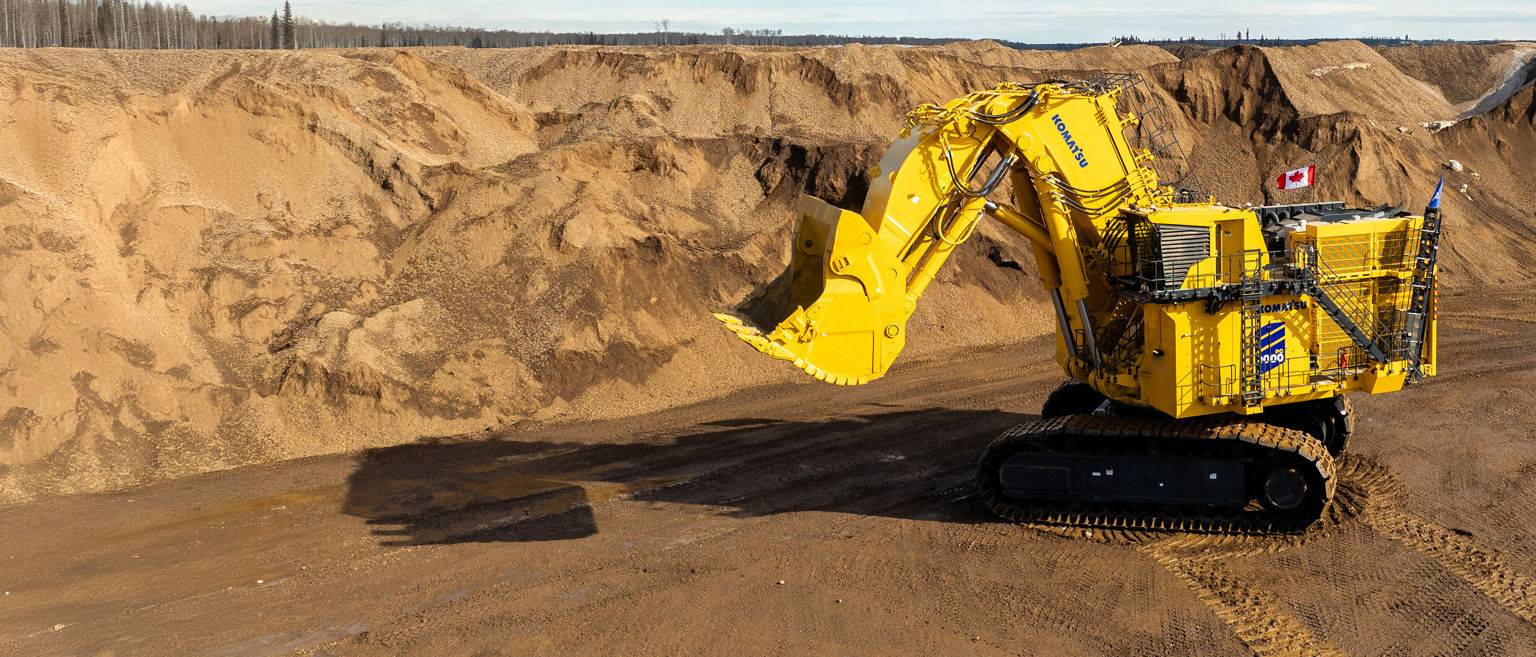
Komatsu sits at the boundary between robotics and earthmoving. Through its Smart Construction program and an AI venture called EarthBrain, built with Sony, Komatsu uses AI to process drone survey imagery, automatically removing equipment and obstacles from the pictures and generating a 3D point cloud of the site without the usual ground control points. That feeds into Intelligent Machine Control machines, dozers and excavators that grade to the model automatically and cut the number of passes a job needs. Komatsu has stated cost reductions in the range of twenty to thirty percent for certain workflows, but we could not independently confirm that exact range, so read it as a company stated figure. The underlying capability, AI cleaning up drone data and machines grading to a digital model, is well established and in the field today.
Progress tracking: comparing what got built to what was drawn
Every project manager knows the gap between the percent complete on the report and the percent complete on the ground. AI progress tracking is built to close that gap. The tools capture the site visually, then compare what they see against the model and the schedule, so the report reflects reality instead of optimism.

NCC, one of the largest contractors in the Nordic region, uses a system from a company called Buildots to track progress automatically. A site walker wears a hardhat mounted 360 degree camera and simply walks the floors as they normally would. The AI processes the footage, identifies what has been installed, and compares it against the BIM model and the schedule, so the office can see where work is genuinely ahead or behind without anyone filling out a manual report. Buildots reports that NCC cut manual reporting time sharply and improved how reliably work matched the plan. Those improvement figures come from the vendor's case study, so weigh them as vendor reported rather than independently audited. The mechanism, though, is easy to verify and easy to believe: walk the site, let the model do the counting.
This same loop, capture reality and compare it to the plan, is one of the most repeatable patterns in all of applied AI, and it shows up far beyond construction. You can see versions of it in our look at how manufacturers run on AI, where factories use vision systems to check parts against a standard the same way a contractor checks a floor against a model.
What this means for your firm
Step back from the ten companies and a pattern shows up. None of them handed the whole job to a machine. They took one painful, repetitive task, counting quantities, reading safety photos, comparing a site to a model, and pointed a tool at it. The estimator still sets the price. The superintendent still walks the site. The engineer still signs the drawing. AI did the grinding in the middle.
That is the opening for a firm that is not a tech company and never wanted to be one. You do not need a robot or a data science team to start. You need to pick the task that is bleeding the most time or the most risk, and learn how to ask an AI tool to take a first pass at it. The skill that matters is not coding. It is knowing how to describe the work clearly enough that the tool can help, and knowing how to check what it gives back. That is judgment, and you already have decades of it.
That is exactly what we teach at The Leveraged Years. We work with professionals over forty who know their trade cold and want to put practical AI to work without the hype and without pretending to be twenty-five. If you want to see where you stand, our short assessment is at our AI readiness quiz, and you can look at the full set of our courses built for senior professionals who want results, not buzzwords.
Frequently asked questions
Is AI actually being used on real construction sites, or is this mostly marketing?
Both, honestly, and you have to separate them. The clearest real uses are estimating takeoffs, photo based safety analysis, and progress tracking by comparing site scans to a model. Those are running on major projects today. The flashier robotics stories are real too, but narrower and earlier. When you read a bold percentage, check whether it came from an independent source or from the company or vendor selling the result. Many of the numbers in this field are self reported.
Will AI replace estimators, project managers, and superintendents?
Nothing in these ten examples replaced those roles. The tools removed grinding work, the takeoff math, the photo sorting, the manual progress report, and handed the judgment back to the person. The bigger risk to your job is not the AI itself. It is a competitor who learns to use it and bids faster and safer than you. The people who do well are the ones who treat the tool like a sharp new crew member they have to learn to direct.
We are a mid-sized firm. Where should we start?
Start with the task that costs you the most time or carries the most risk, which for most firms is estimating or safety. Pick one project as a test. Use an AI tool to do a first pass on takeoffs or to review jobsite photos, then have an experienced person check the output. You are not trying to automate the company. You are trying to give one good person more reach. Keep the first project small enough that a bad result costs you nothing but a little time.
How do I tell a real result from a vendor's exaggeration?
Ask three questions. Who measured this number, the company itself, the software vendor, or an independent party? Is it tied to a specific named project or is it a vague claim? And can you run a small test of your own on a job you already know the answer to? In this article we flagged figures from Turner, Komatsu, NCC and Buildots, and Blattner as company or vendor reported for exactly this reason. A result you can reproduce on your own project is worth more than any case study.
Do I need to be technical to use these tools?
No. The estimators and project managers putting AI to work today are mostly experienced professionals who were not raised on this technology. The skill is describing the job clearly and checking the answer, which is something you already do every day with subcontractors and crews. That is the whole premise of how we teach it. If you can write a clear scope, you can direct an AI tool.
Want to run these patterns across your own firm? That is what the Enterprise Leverage System is built for: rolling AI out across estimating, project controls, and the back office without losing the judgment that keeps a jobsite safe and a bid profitable.